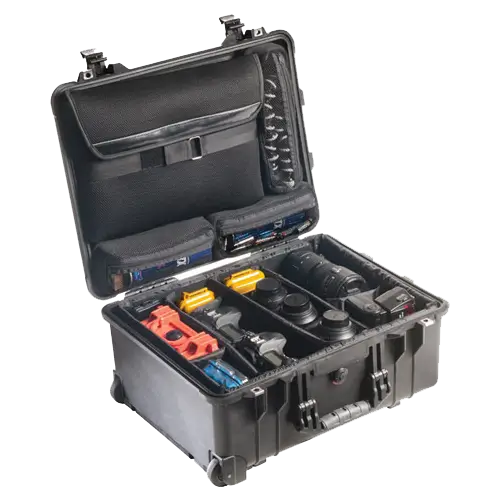
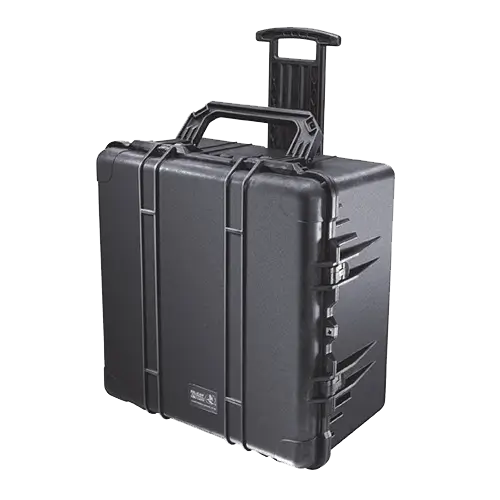
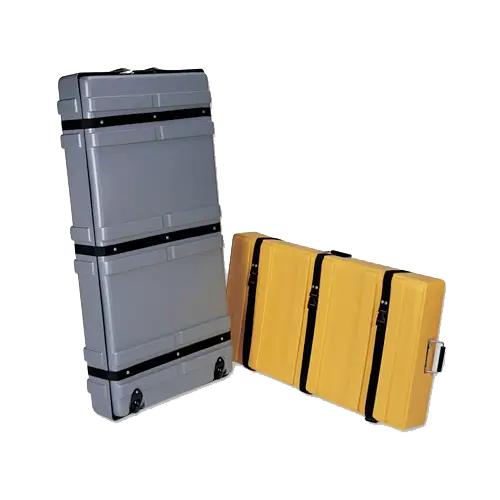
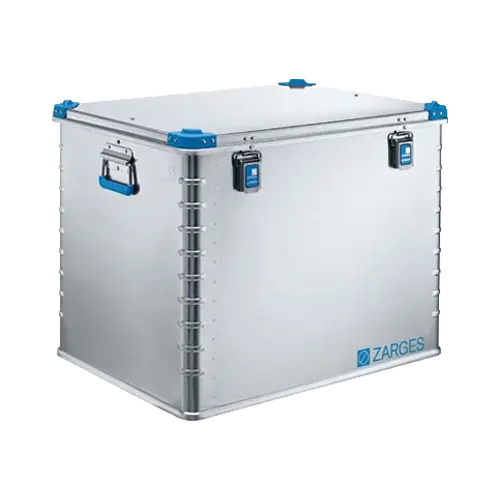
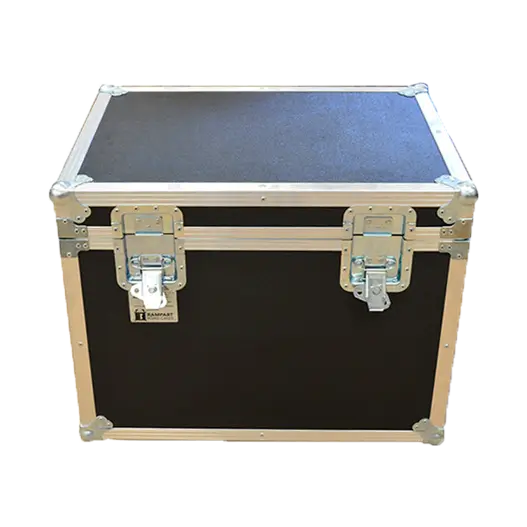
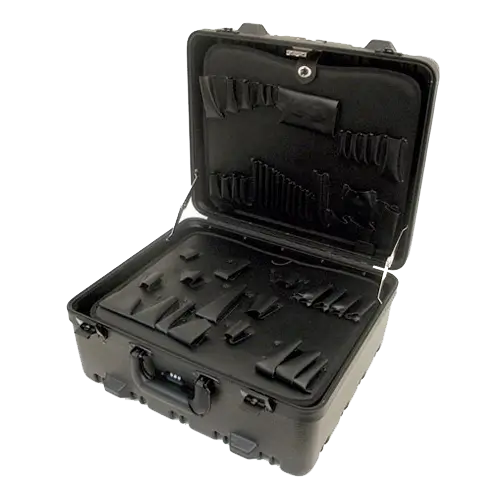
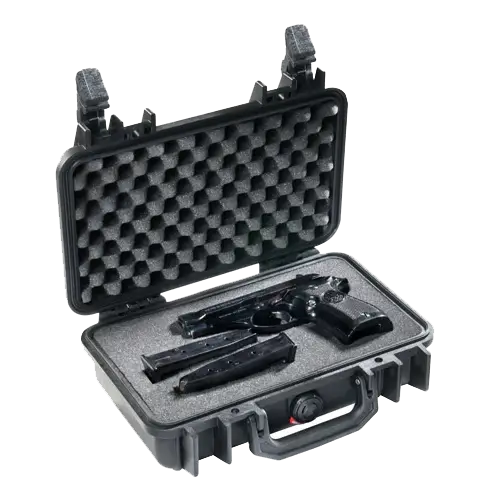
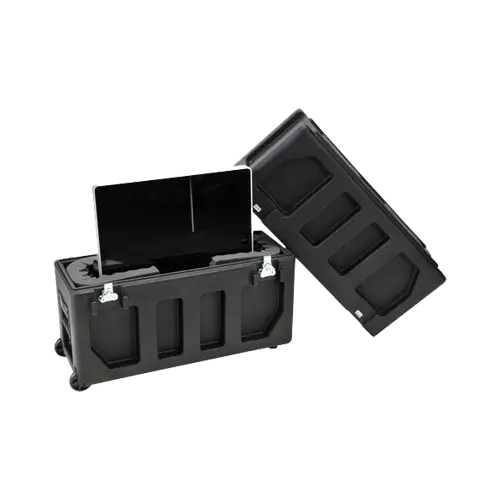
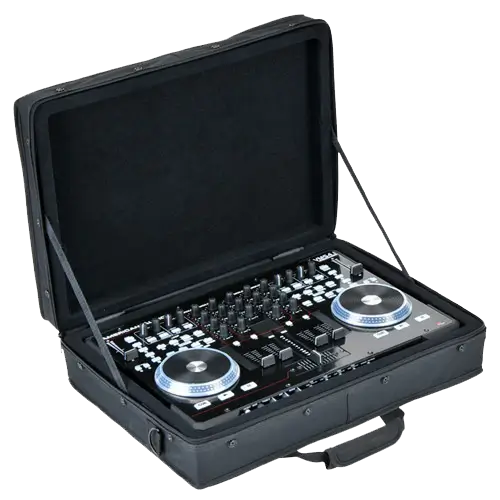
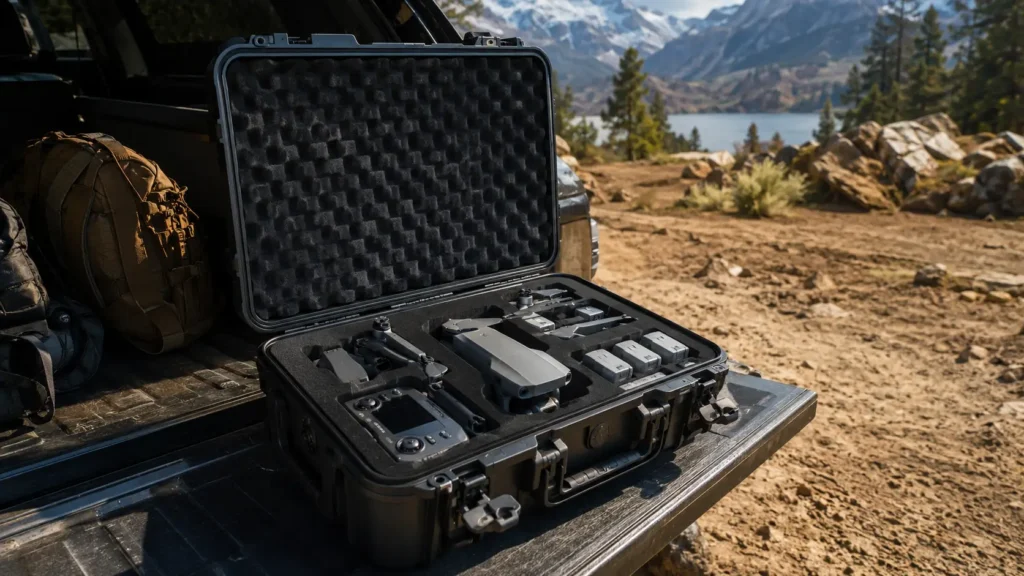
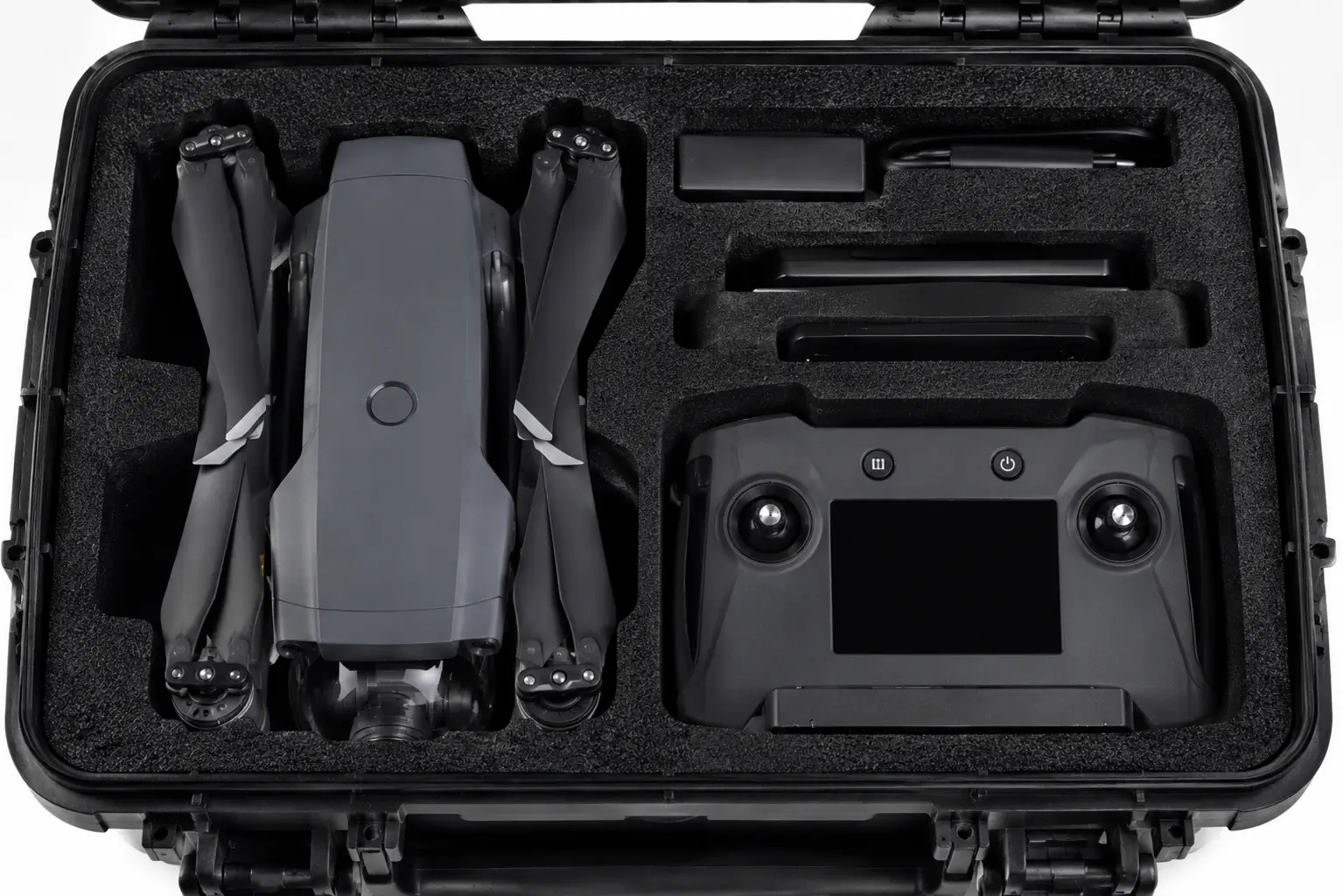
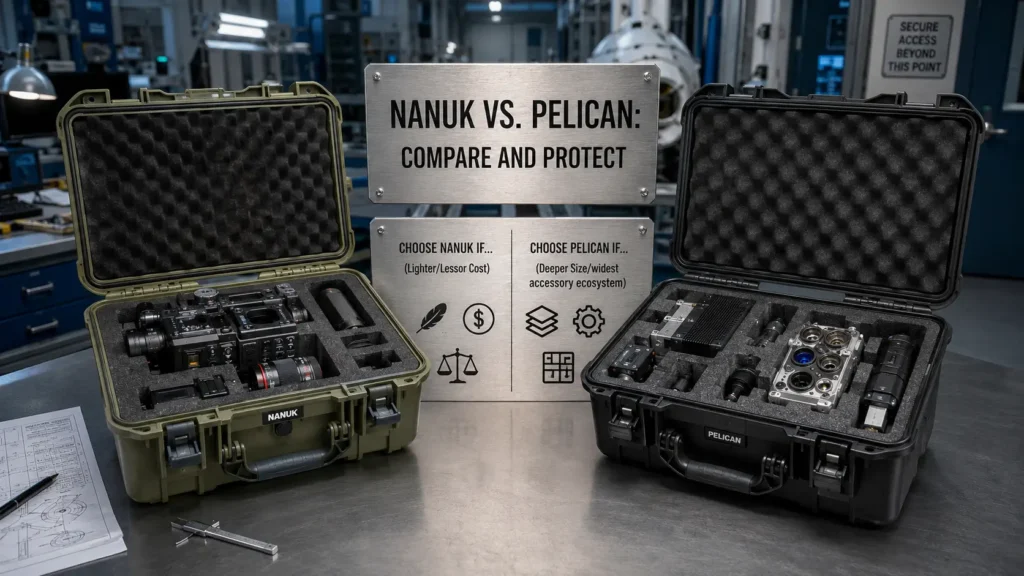
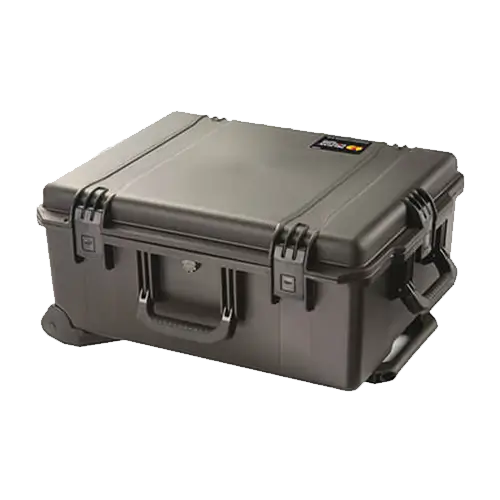
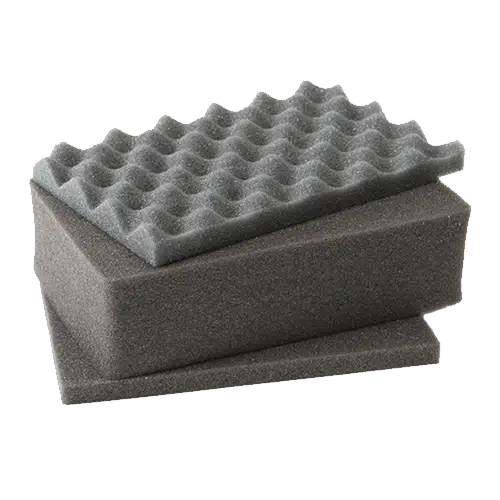
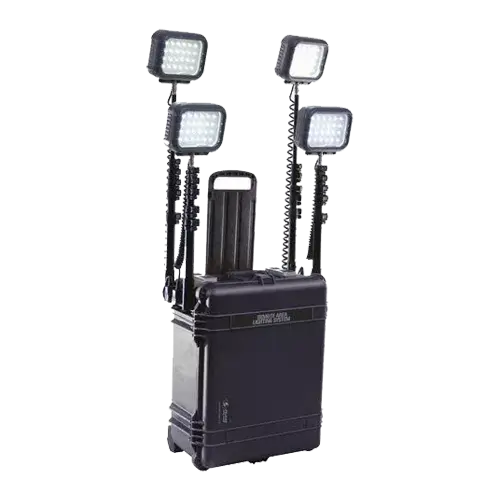
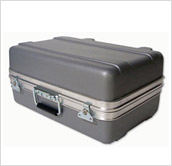
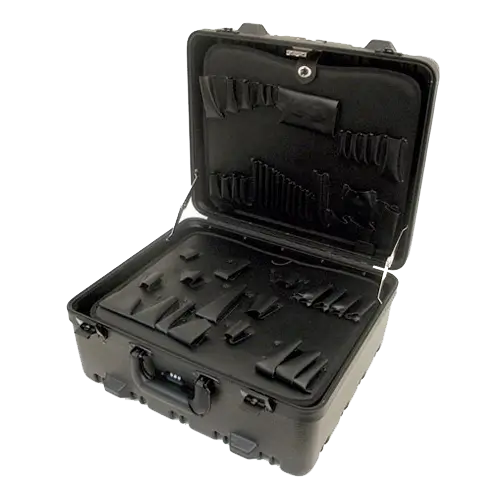
A good drone case has to do more than fit the airframe, it needs a foam layout that protects the gimbal, props, controller, and batteries independently, since those are usually the first parts to fail after a drop or hard landing. For commercial and professional drone operators, the case is also part of the equipment budget: a damaged gimbal or camera module can cost more than the case itself.
Hard case vs. padded backpack
Padded backpacks are lighter and better for hiking to a launch site, but they offer minimal crush and impact protection compared to a hard case. Commercial operators moving equipment between job sites, flying, or shipping a drone typically need a hard case; hobbyists who mostly walk their drone to a nearby field can often get by with a well-padded bag. The same logic applies to other sensitive gear, see our photography and camera equipment cases for a similar comparison.
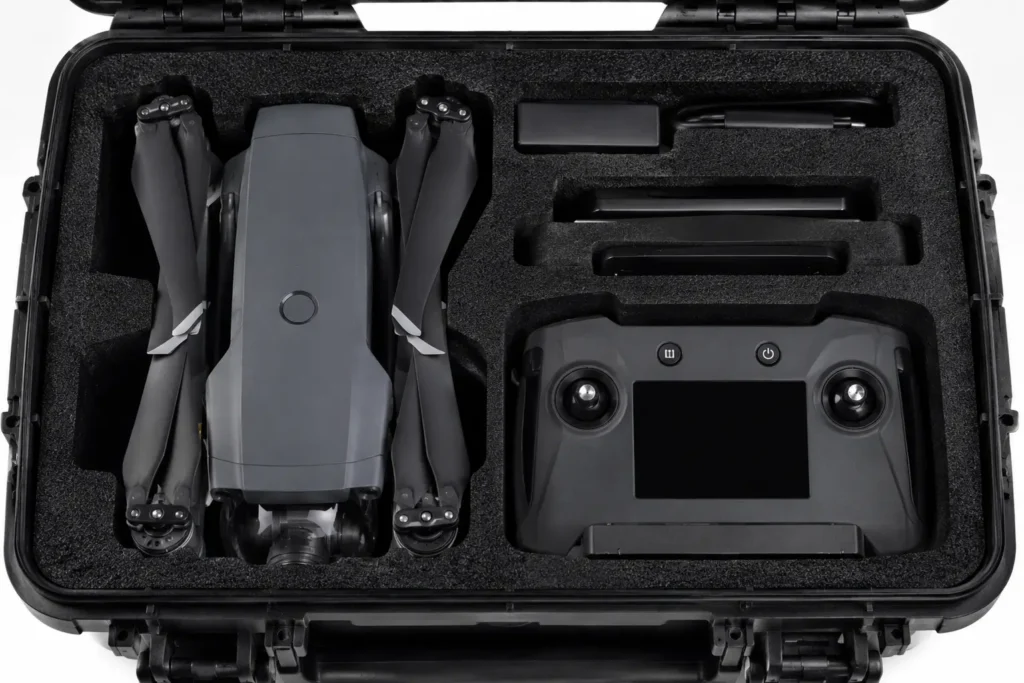
What the foam layout needs to protect separately
Gimbal and camera module
The most fragile and expensive component on most professional drones; needs a dedicated, snug cavity.
Propellers
Should be stored separated from the airframe, ideally in their own recessed slots so they can’t flex or crack against the body.
Batteries
Many carriers (including airlines) have specific rules about how lithium batteries must be packed; a case with a dedicated, ventilated battery compartment simplifies compliance.
Controller and accessories
Cables, ND filters, and spare props need their own space so they don’t rattle against the airframe.
Sizing and travel considerations
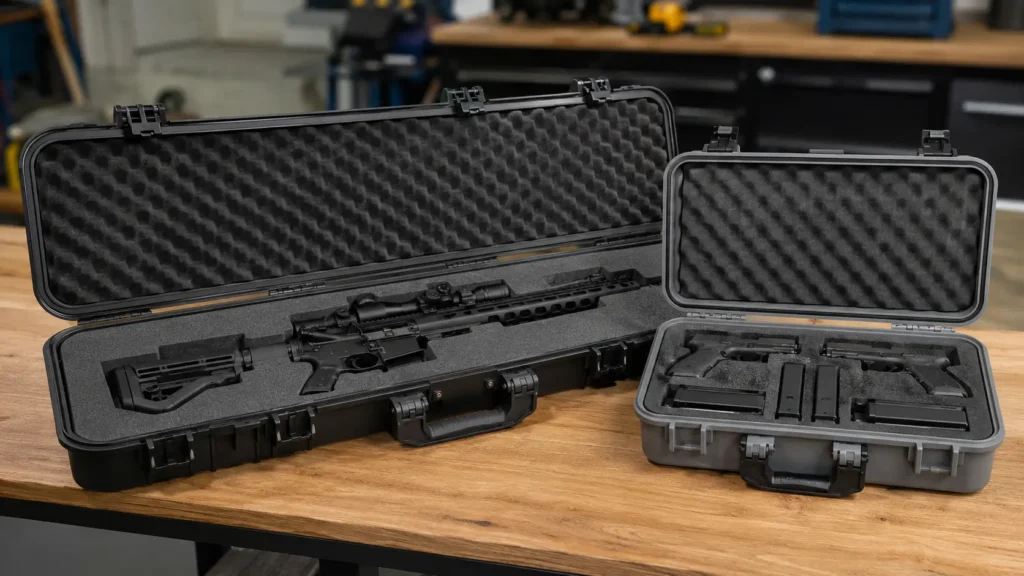
If you fly commercially and need to carry a drone case as airline carry-on, check the airline’s carry-on dimension limits before buying, many professional drone cases are sized specifically to fit as carry-on to avoid checking an expensive airframe and gimbal. If the case will be checked, prioritize crush resistance and a documented drop rating over carry-on sizing, the same principles we cover in our Hard Gun Case Buying Guide apply here.
When to go custom
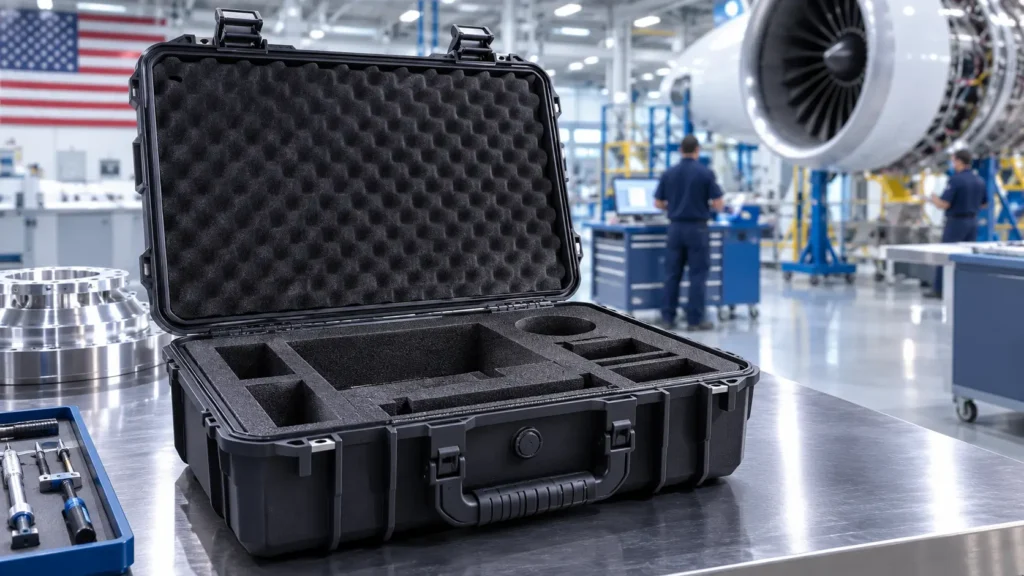
Off-the-shelf drone cases work well for common consumer and prosumer models. Custom CNC-cut foam becomes worth it once you’re carrying a less common airframe, multiple batteries and accessories, or a combination of drone plus other gear (like a second camera body or ground station) that no off-the-shelf case layout accounts for.
Frequently Asked Questions
Should I get a hard case or a padded backpack for my drone?
Choose a hard case if you’re flying commercially, checking the drone as luggage, or shipping it, choose a padded backpack if you’re mainly hiking short distances to a launch site with a consumer drone.
Can I pack drone batteries in a checked hard case?
Airline and carrier rules on lithium battery transport vary and change; check your specific airline’s current policy before flying, and prioritize a case with a dedicated, ventilated battery compartment either way.
Do I need custom foam for a common consumer drone?
Usually not, most popular consumer models have widely available pre-cut foam inserts. Custom foam becomes worthwhile for less common airframes or when packing extra accessories alongside the drone.
Your growth is the mission.
AllCases designs, cuts, and installs custom foam inserts and protective cases for defense, government, aerospace, and industrial customers nationwide from our ITAR-compliant, AS9100D and ISO 9001:2015 certified facility in Oldsmar, FL. If you need a custom foam layout to protect a drone, gimbal, and accessories that don’t fit an off-the-shelf case, visit our homepage or request a quote and an engineer will follow up the same business day.