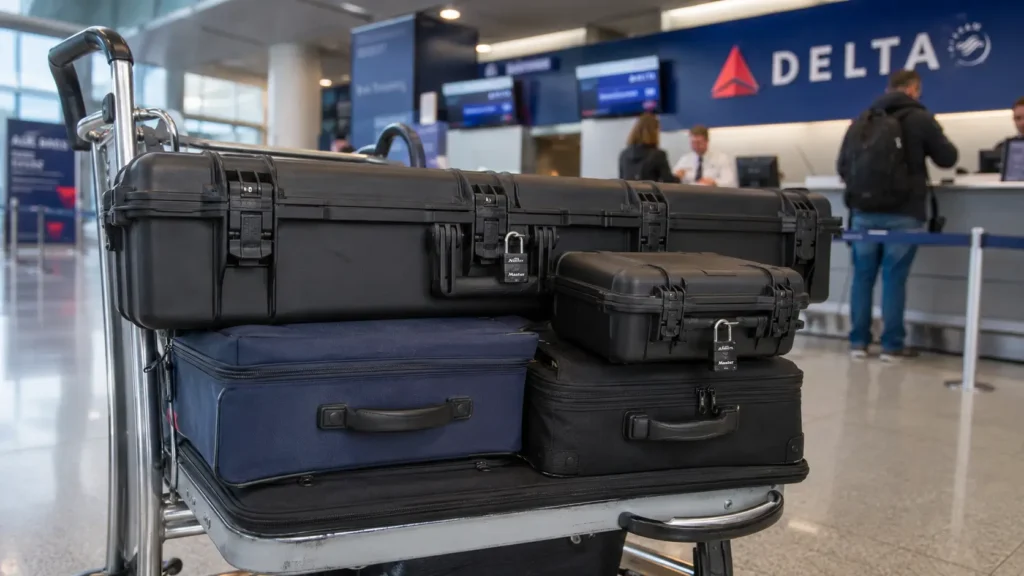
Per TSA, firearms must be unloaded, packed in a locked hard-sided container, transported in checked baggage only, and declared to the airline at check-in, every time, even if you’ve flown with the same firearm before. Get any one of those wrong and you risk a delayed flight, a missed connection, or a civil penalty.
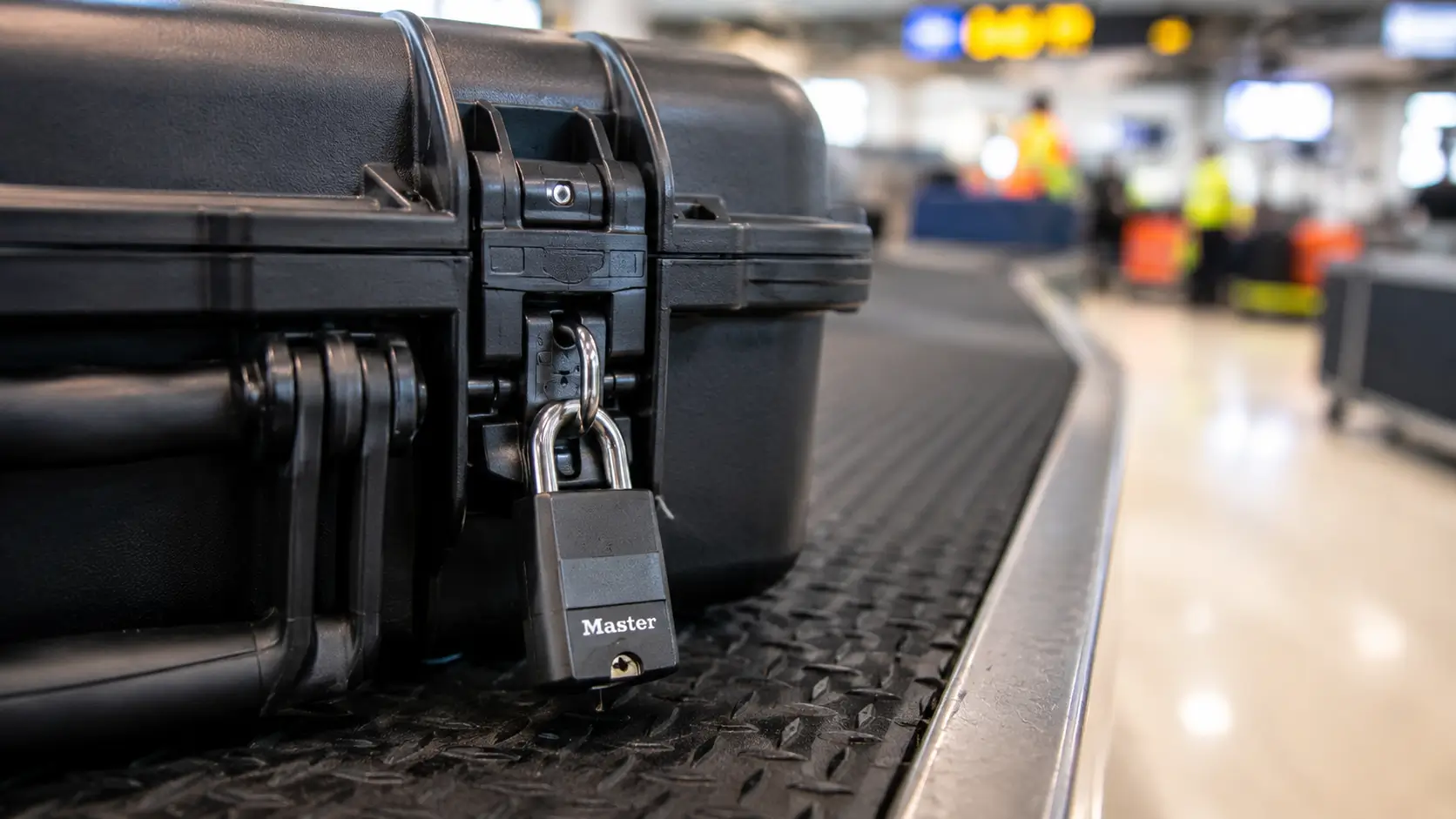
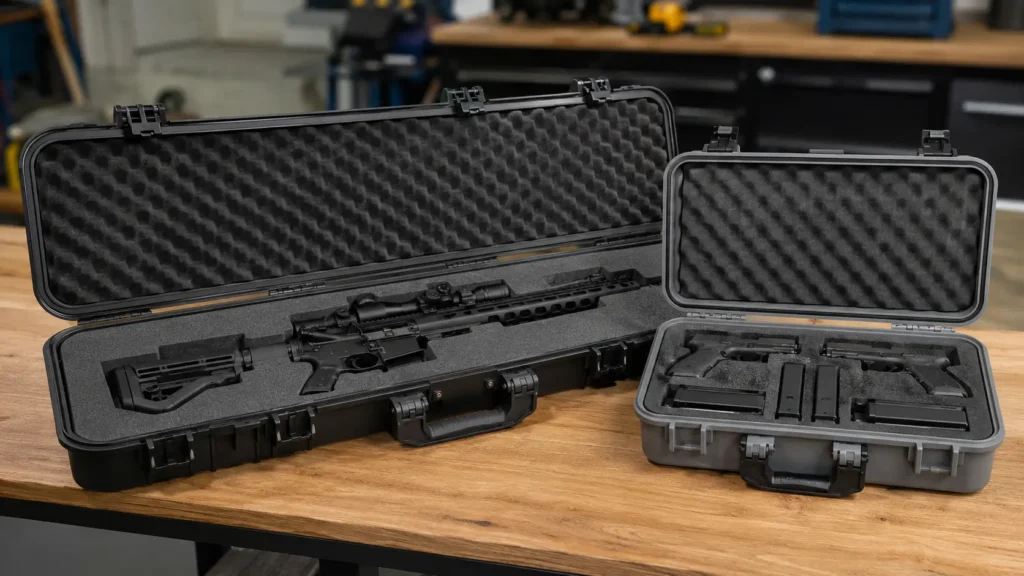
Firearms are never permitted in carry-on bags or personal items, full stop. They must go in checked baggage, inside a hard-sided container that locks, completely unloaded, no round in the chamber, no attached magazine. You then tell the airline, in person, at the check-in counter, that you’re checking a firearm.
Ammunition and loaded magazines or clips must be securely boxed, or packed inside the same hard-sided case as the unloaded firearm. Loose ammunition rattling around a suitcase is not compliant. Most travelers pack ammunition in its original manufacturer box, then place that box in a dedicated foam cutout inside the case.
This is the one place firearm travel rules diverge from normal luggage rules: TSA should not open a declared, locked firearm case without you present. Use a sturdy padlock or a case with a built-in combination lock, and keep the key or combination with you, not in your checked bag, not in a pocket of the case itself.
What are the TSA requirements for a firearm case?
Hard-sided, lockable, and strong enough to contain the firearm securely, the firearm must be unloaded and the case locked before it’s checked.
What type of gun case is TSA approved?
There’s no single “TSA-approved” certification for gun cases the way there is for TSA luggage locks. Any hard-sided case that locks and secures the firearm meets the requirement; look for cases specifically built and marketed for firearm travel, like our gun cases.
Can TSA open my gun case without me present?
No, for a declared, locked firearm case, TSA is not supposed to open it without you there, which is different from standard checked luggage.
Do I need a TSA lock for my gun case?
No. Standard TSA-recognized luggage locks (the ones with a universal TSA key) aren’t required or even recommended here, use your own padlock or the case’s built-in lock instead.
Not sure which case fits your firearm, or whether you need a rifle case or a pistol case for your trip? Our Hard Gun Case Buying Guide covers shell ratings, latches, and foam, and our Rifle Case vs. Pistol Case guide breaks down sizing for what you actually carry.
AllCases designs, cuts, and installs custom foam inserts and protective cases for defense, government, aerospace, and industrial customers nationwide from our ITAR-compliant, AS9100D and ISO 9001:2015 certified facility in Oldsmar, FL. If you’re outfitting a hard case for firearm travel and want a lockable, custom-foam setup that meets checked-baggage requirements, visit our homepage or request a quote and an engineer will follow up the same business day.